
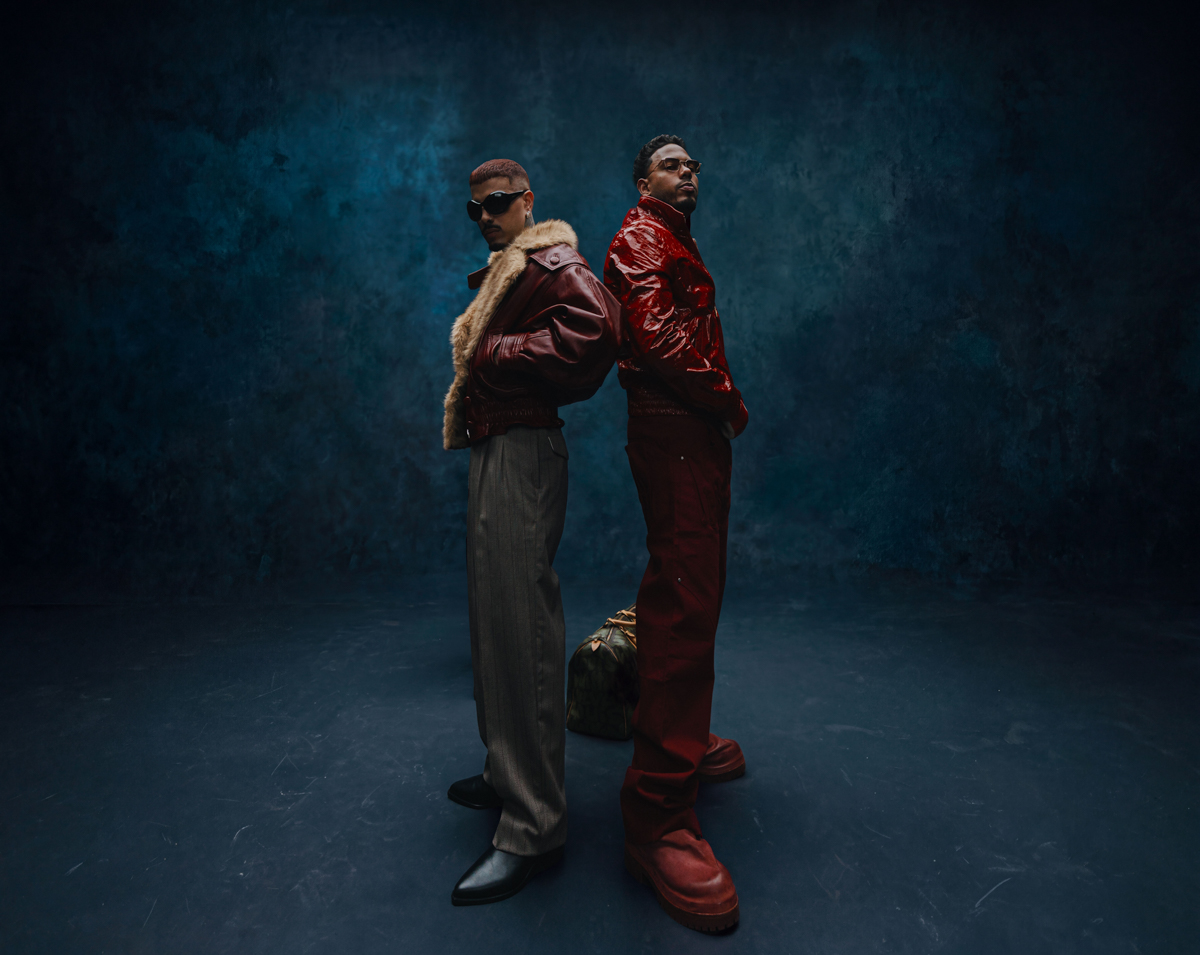


Colin Kimia is what you would call a genius. As the person overseeing costumes on set, he makes sure the cast feels as comfortable as possible so everything comes together perfectly on camera. We talked with him about his role on the team behind the series, how he got his start in the costume department, and plenty more iconic details you don’t want to miss. So, keep on reading.
How would you define yourself as a person and as a creative?
What connects most with my career and my personal life is my curiosity. I feel I’m always very curious. I try to find different ways to do the same thing. I’m always keeping up with runways, red carpets, magazines. I just like knowing what’s going on, what’s happening. “Curious” is the word that really defines me, both as a person and as a creative.
What has been the most important lesson you’ve learned throughout your career working in the costume department?
One thing that really stands out to me, and that I always try to do, is stay open-minded and listen to other people. The ones who have been working in costumes for 50 years have a wealth of knowledge and understand how things work. But people who are just starting out, fresh out of fashion school, also have great ideas. You have to stay open-minded. There are so many ways to solve an issue. For me, that’s the most important thing: being collaborative.
The costume department in The Body, which just came out, really caught my eye. The outfits were on another level – absolutely iconic. How does a costume department typically work on a production of this scale? What do the creative and practical processes look like, from initial preparation to the actual filming days?
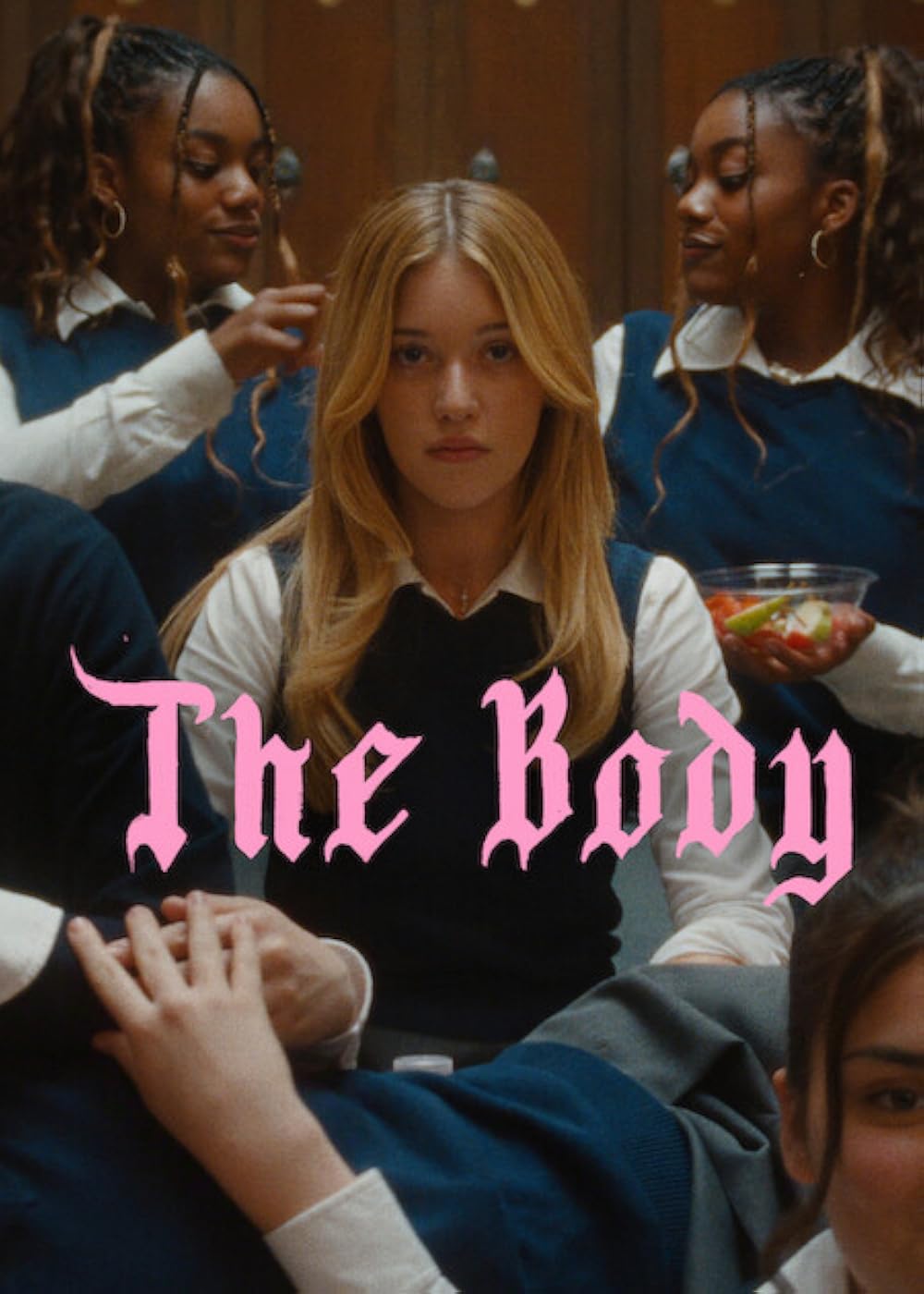
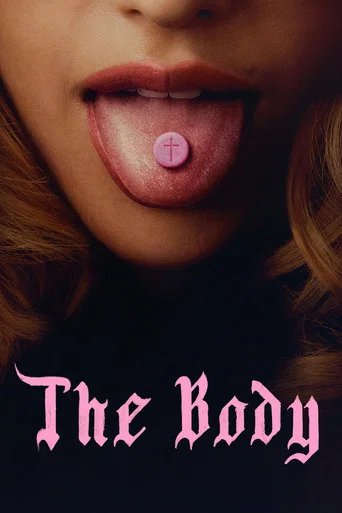
Regarding the series, Quinn Shephard created the world, and she and Gina Gammell (co-showrunner) set the tone. They had a very clear vision of what they wanted and found someone who could execute it. The fabulous Mirren Gordon – Crozier, our costume designer, who brought loads of research and references. She had so many cool references and iconic pieces that everything kind of clicked. Then she, Gillian Steinhardt (Assistant Costume Designer) and the shoppers put together all the costumes we were going to have. On a show like this one, we also have a cutter, who makes the patterns, and breakdown artists, and then it comes to us, the on-set team. We have trucks with all the costumes, each piece documented, and on the day of filming they end up in the actors’ rooms. When the actors are ready, they come to set, and Mirren comes too, and we make sure everything is perfect. Then I keep the continuity throughout the show. If anything rips, or if there’s any problems, I take care of it.
As a costume set supervisor, what does your role involve day to day, and what are the responsibilities people might not expect?
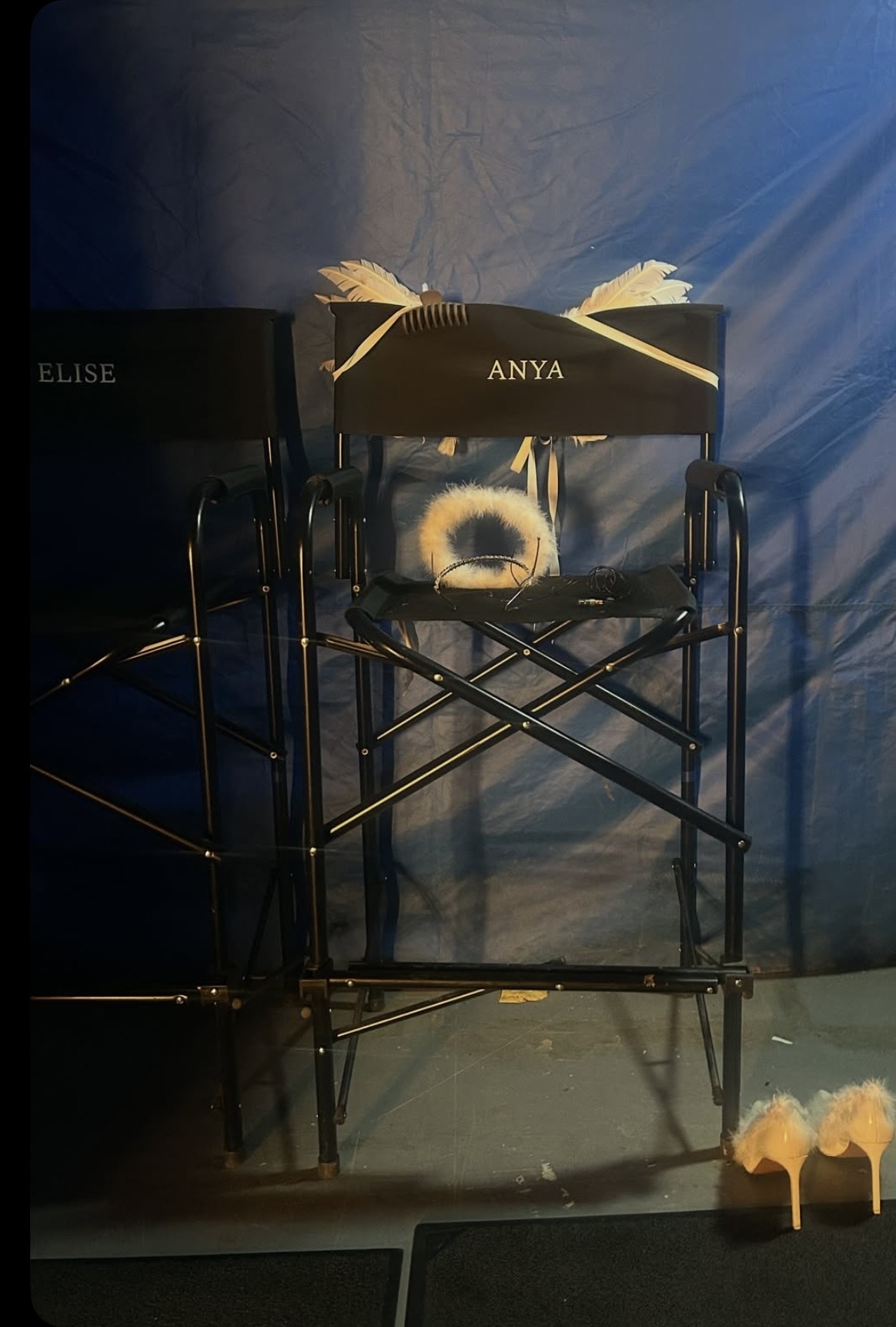
A day in my life while filming The Body would go like this: I start by going to the truck or wherever our base camp is set up. I’ll read the sides, meaning the pages of the script we’re shooting that day. If it’s a continuity, I’ll refresh my memory about what’s happening and what the costumes are. If we’re establishing a look, I’ll check Mirren’s boards. I pack up, go to set, and find the green room. I’ll lay everything out for the cast – for example, their heels, bags, and anything else they won’t bring from their trailers – and set it up on the cast chairs. Then we go through the blocking and see where everyone is going. If someone is now going to exit outside instead of going upstairs, I need to know that. I ask myself questions like, “Does she need a coat? Does she grab her purse?” We work all of that out together. Afterward, I go back to the tent. The cast comes in, along with the sound team, who wire them up. I help with that too, because some costumes make it complicated. I’ll double-check that the continuity photos match what they’re wearing. If we’re establishing a look, Mirren and Gillian are there, and we go through it with them. I take continuity photos, and then the actors are ready to go to set. They block. The last thing I do, to make sure everything is perfect, is watch the monitor and check that everything stays in place. It’s the same process over and over again.
What do you think is the biggest difference between working in costume preparation and working directly on set?
The main difference is that, in the office, you have crazy deadlines and a lot of work to get done in a short period of time. On set, the process is much faster-paced. It can be unpredictable, especially in Canada, where we filmed. The weather can get really cold. If we’re planning to shoot outside and a storm is coming our way, you have to find solutions quickly. This series was a little different because they filmed most of the exterior scenes in the first two weeks, so we could get the beautiful autumnal scenery. And get the exteriors out of the way before the brutal Canadian winters. But still if something happens or someone gets sick, or there is a lightning storm we´re always ready to switch things up quickly. The office is more about planning, meetings, and prep. I find office work a bit more consistent – it’s a steady flow. On set, things can be slow one minute and then move much faster once we’re filming. Working in the office is more like running a marathon, while being on set is a sprint.
How important is teamwork within the costume department on a production like this? How do you coordinate with the wardrobe assistants and other team members to make sure everything is running smoothly on set?
In the costume department, we have the designer, the assistant designer, and then a couple of supervisors, and that spreads out the workload. So it’s easy to spot an issue, and to get the right person to handle it. There’s a head sewer, an office supervisor, a set supervisor, a truck supervisor, and a background supervisor. We’re all connected within that workflow. And we have a lot of group chats, maybe 10, so the information gets out there. We split up the chats by what we need at that exact moment, so you don’t bother everyone with all the details.
What was it like working alongside Mirren on The Body? How would you describe the creative relationship between both of you?
Mirren is iconic. Her vision is so good that she’s right all the time. Whatever she’s doing, you’re like, “OMG, amazing”. She was really nice to work with, in the sense that I really appreciated her vision and her way of working, and it made it really easy to help her facilitate what she wanted. Her boards were all around the office, and they were so good. Every time I went in, I’d just be looking at the references she pulled. She’s a very inspiring person. I feel like I learned a lot from her and from working alongside her.
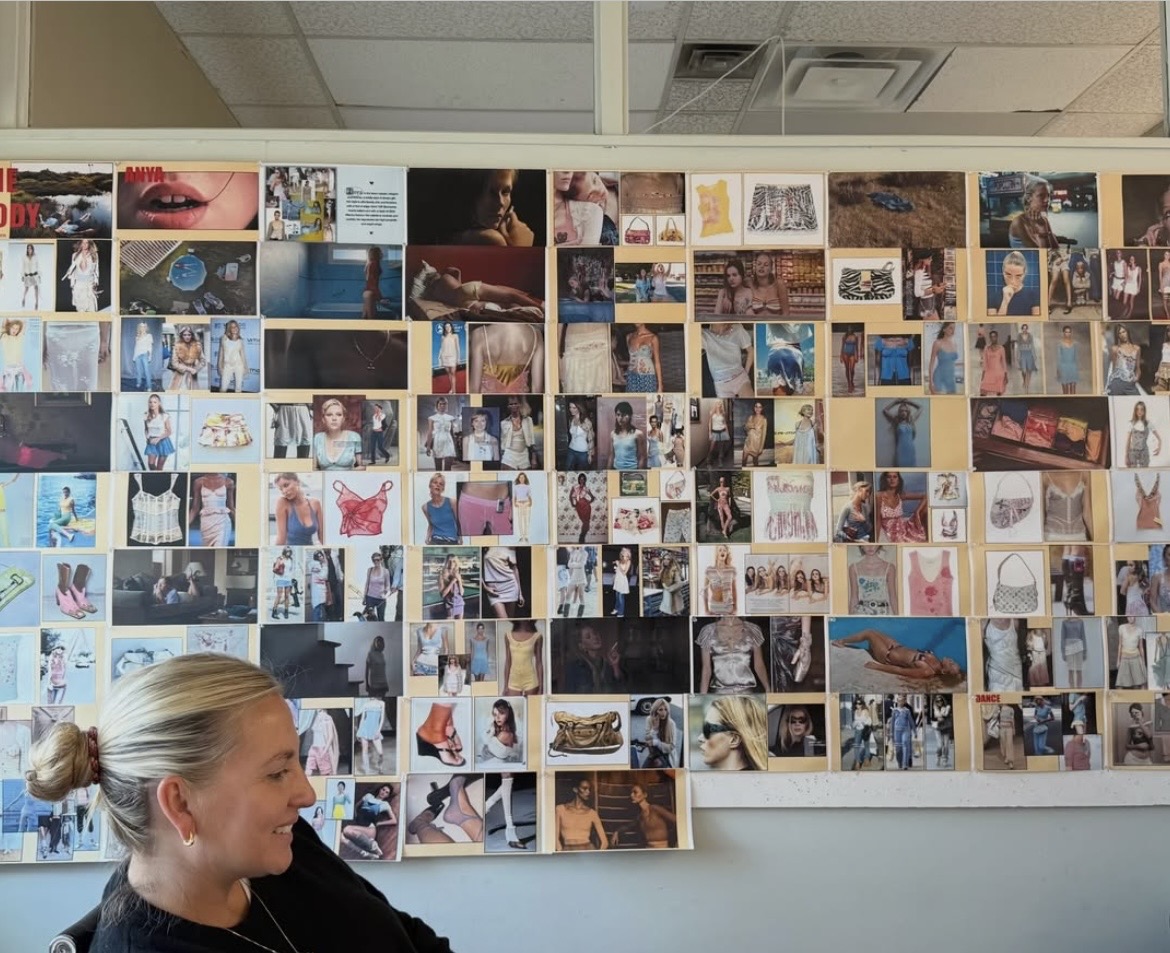
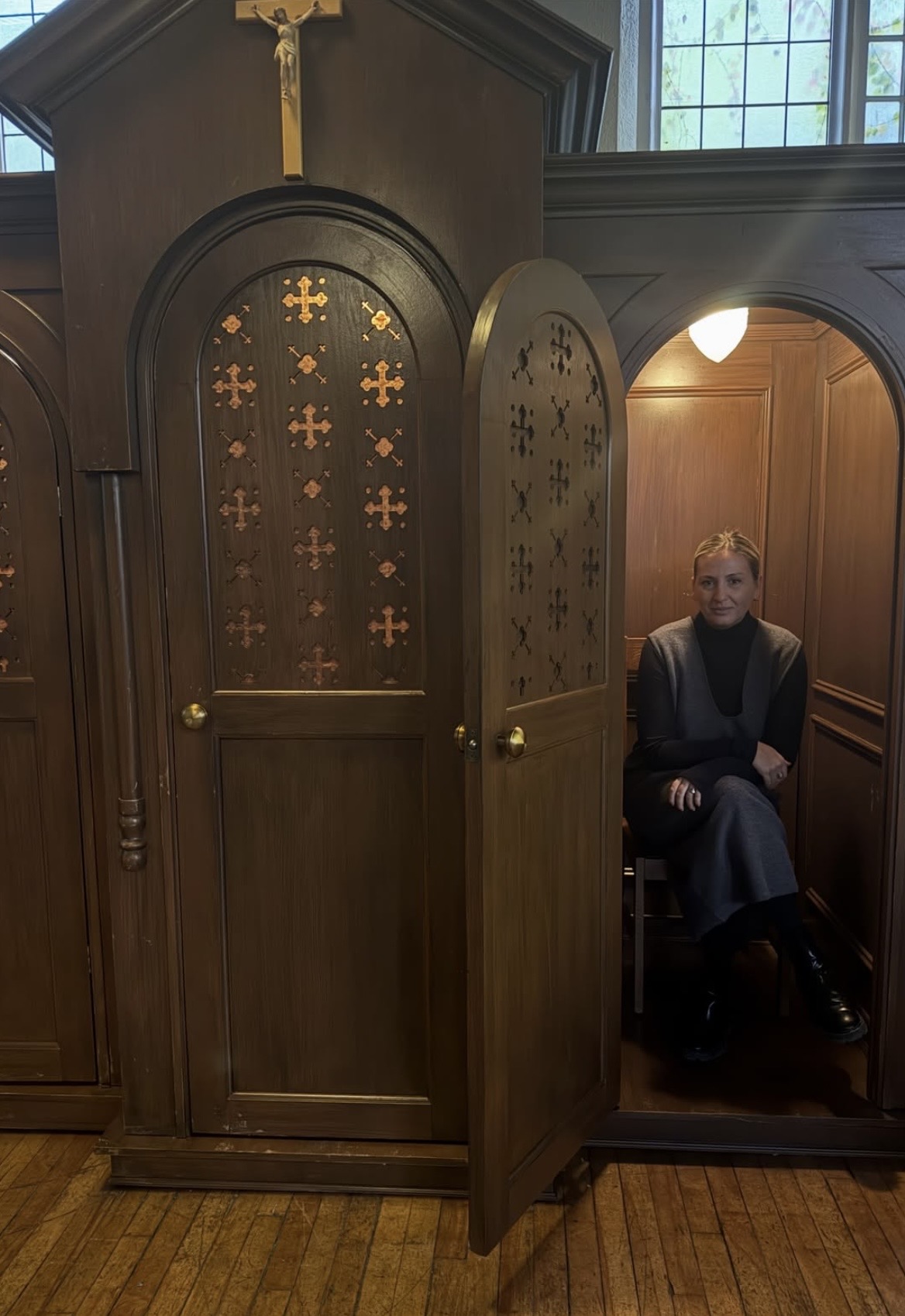
I feel like the costume department office is like Miranda Priestly’s in The Devil Wears Prada.
Yes, except she’s lovely.
How important is communication between the costume designer, the director, the producers, and the actors during filming? What does that collaboration look like when everyone has different needs or perspectives?
On this one, in particular, it was a lot easier, because I think Mirren, Quinn, and Gina really got each other’s vibe. Mirren was very good at keeping them in the loop during prep, so they had all the information and knew which costumes were coming to set. Obviously, there are still going to be moments where we creatively feel we could push the bar further, or someone has an idea, or they tell us to add something, like, “Hey, costumes, can you make that happen?”. And it’s at the last minute, and Mirren is great at accommodating that; she had so many backups. What was on camera was only 10% of what we had, so there’s always extra stuff to play around with. It’s always good to keep Mirren in the loop on what’s going on on set. If a producer or a director has a certain question, we flag Mirren directly and get an answer quickly. If we’re in the middle of shooting and something needs a response right away, it’s easier for me to go up to them myself. Quinn and Gina were very approachable that way.
Once Mirren’s designs are ready, how do you ensure that every costume is handled, maintained, and presented on set exactly as she intended? What does that process involve?
We have a whole truck that travels wherever we’re filming. Actually, on this show we have two. They’re basically huge closets full of clothes. Two people are on the truck all the time, making sure everything is cleaned and organized. They’re prepping for tomorrow and fixing whatever happened yesterday on set. There’s a whole team there. Then I make sure the vision is right. I’m always touching base. If she tells me how she wants something styled, I keep it that way, but if someone says, “Maybe we should wrap it this way,” I just text her and she tells me what she thinks. I also take pictures, just to make sure she’s involved in the process the whole time.
For continuity, we have a database: an app called Sync on Set. Let’s take Olivia (played by Sarah Abbott), for example. We have every single costume she’s in, with photos from every scene, with the costume or change. And within each change there is a section called the closet that has every single item, from her socks to her earrings. With a photo of the item, and the information. Where they´re from, what size, what colour, etc. If you look at the phones of the people in charge of this, they have like 75 pictures of different earrings. On this show, they had so many outfits that it’s probably more than that. It’s crazy.
How do you make sure every costume looks exactly as intended throughout filming, especially when scenes are shot out of chronological order?
I use the same app. I always take a picture of the actor in the change. And then I take screenshots of the monitor to make sure that if anything changes – for example she adds a sweater on in the scene – I can say, “That’s the exact moment she added the sweater, so the sweater needs to be on in the next scenes,” and I make a note of that for future scenes. That way I can go back, everything is written down, and there’s no problem.
What are some of the biggest challenges when it comes to looking after costumes throughout a production? Are there particular details that require constant attention?
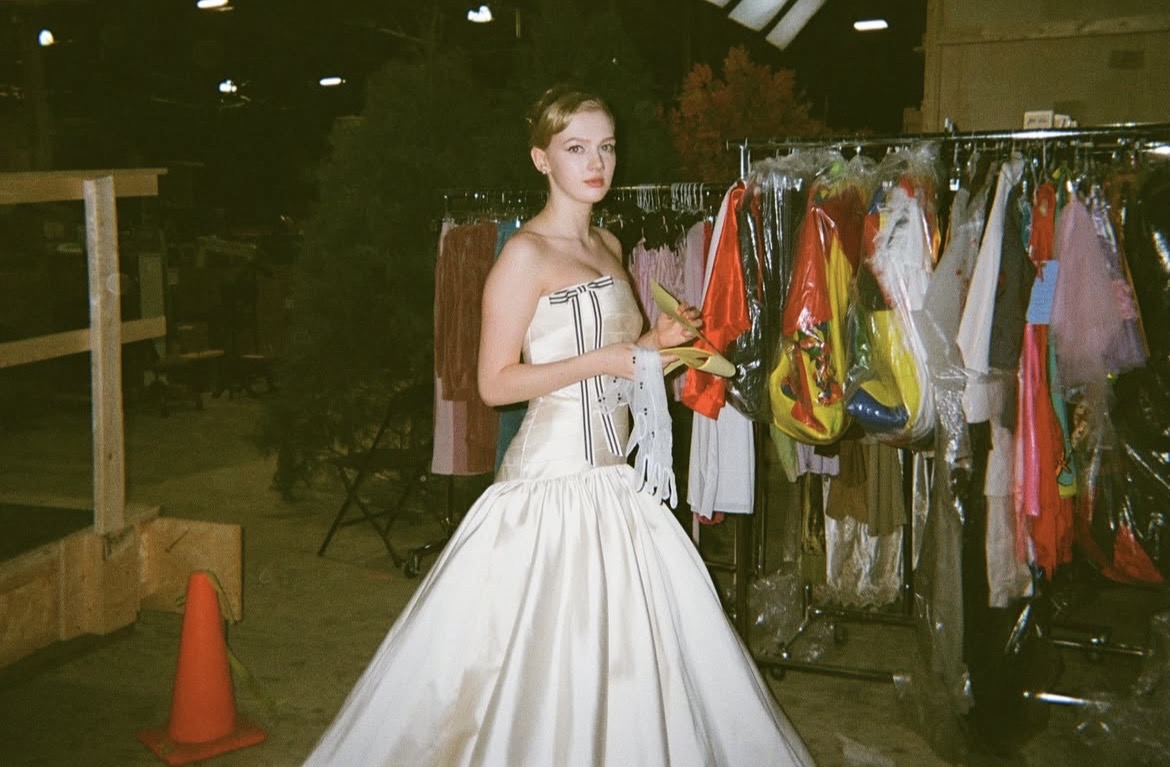
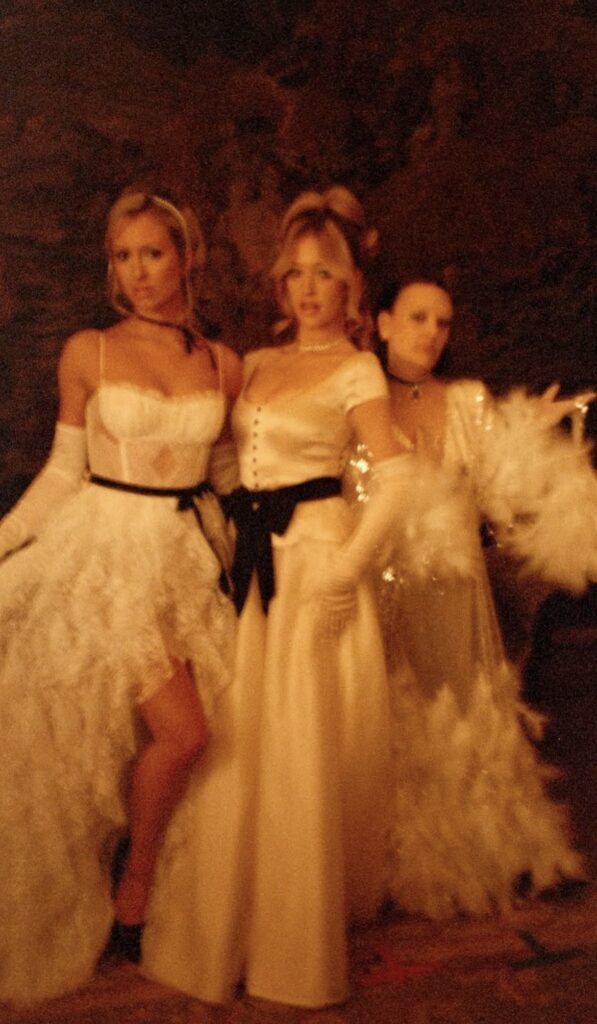
I’m always keeping an eye on necklaces. I hate it when you can see a necklace clasp. On pretty much every take, I go in and make sure the necklaces are on right, because there’s always one that slips, and you can see whether the necklace sits higher or lower. There were so many girls, and it was hard to focus on that on this one because they’re all moving around. It’s a very high-energy show, so whenever I went in, I had to be fixing them. And then there are the basics: if it’s raining outside, keeping everyone dry. For example, at the school dance, they were all wearing basically white wedding dresses, so I had to make sure those didn’t get destroyed over two days of filming. And I had to keep the girls comfortable, because wearing a dress like that is not easy. People were eating, having coffee, and the crew was walking around, so if I saw anything on a dress, I made sure it got cleaned as well as possible so we could continue shooting.
Your role seems to involve making sure everything comes together seamlessly behind the scenes, often solving problems audiences will never even know existed. Is there a particular moment on The Body when you had to think on your feet and find a solution under pressure?
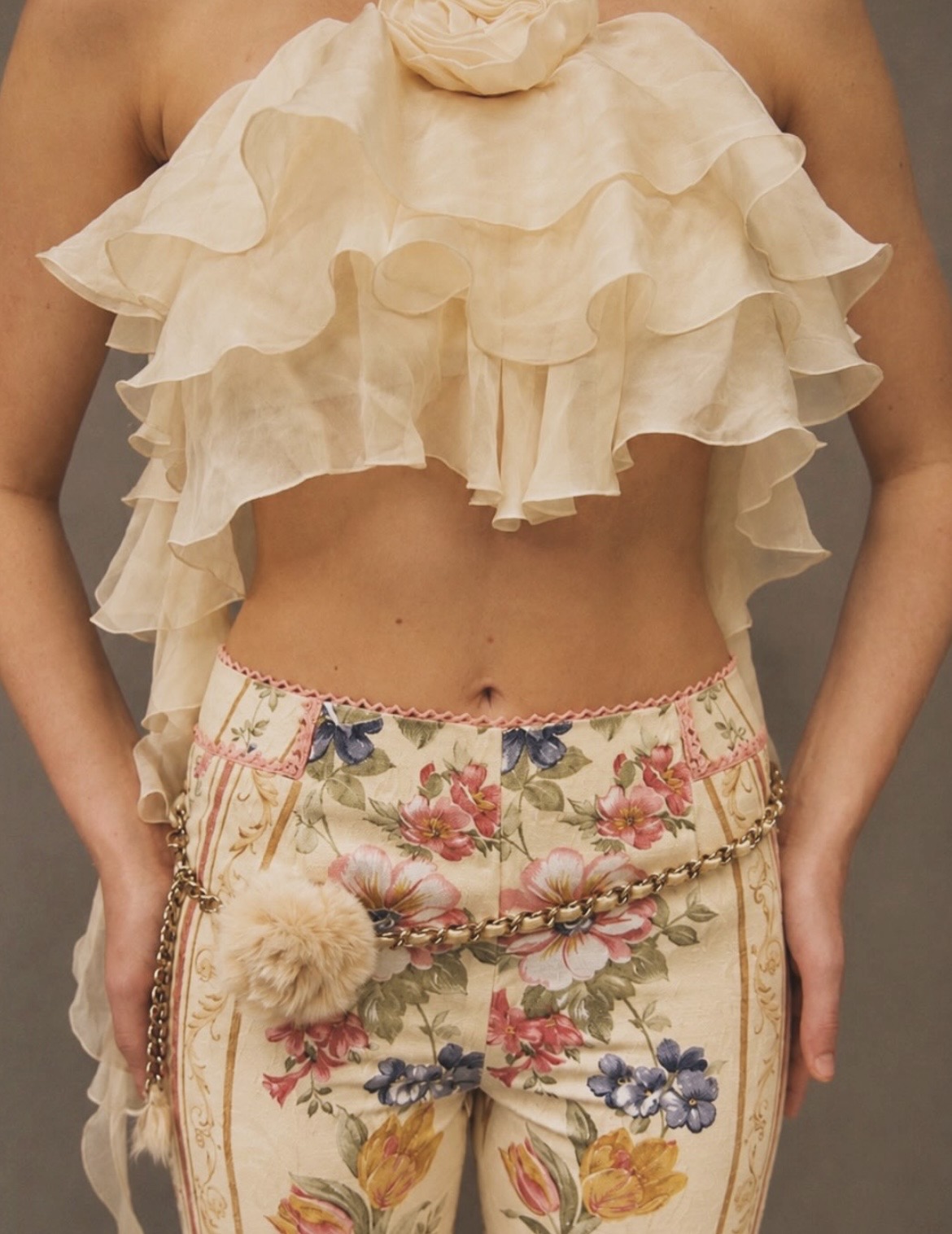
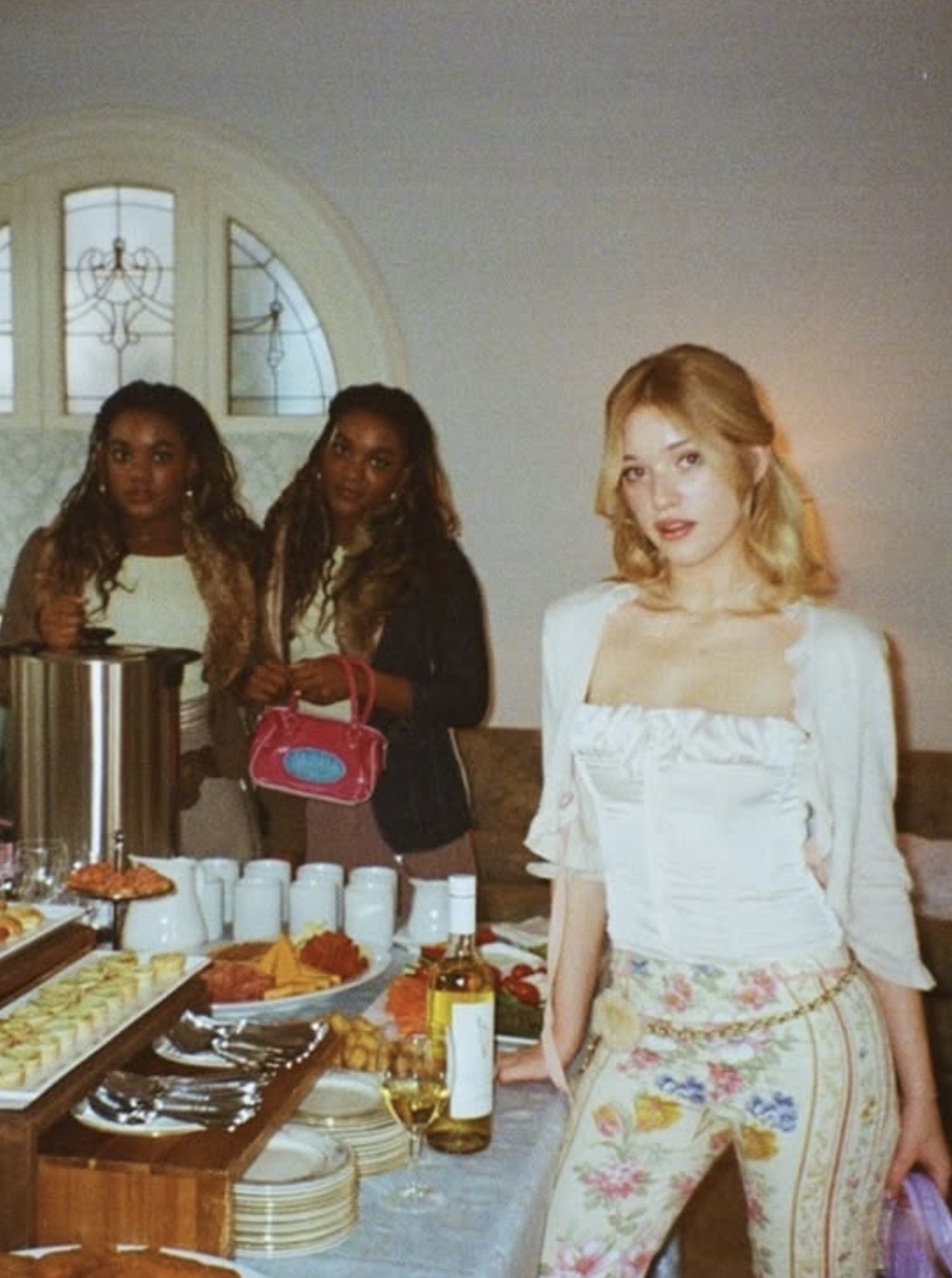
On the first day of filming, there were these gorgeous Zimmerman floral pants. Kristina was wearing them. They were vintage, and within a couple of minutes, the inseam just split before we went to camera. That was the first one that came to mind. I said, “Hey, I need five minutes with Kristina,” pulled her aside, stitched it back up, and she was good to go. It’s interesting, because there are so many people behind me prepping everything and getting it all together for that moment. “It takes a village” – that’s what they say. I’m the one who just makes sure, at the end of the day, that Quinn and Gina are happy, Mirren is happy, and the actors are happy. Just making sure everyone is satisfied and that it looks good on camera. So many people touch the garments – making them, buying them, tying it all together – until the point where I come in, and then it’s my job to make sure it’s executed well.
What’s your role in the moments just before a scene is filmed? Are there any particular checks you always make before the director calls “action”?
Yes. They call finals, and I pop in. If the actors are wearing parkas or hoodies, I´ll grab those, or if they´re wearing Uggs, I´ll give them their heels or costume shoes. And I always check the necklaces; I do a little scan. You’re just double-checking everything so it goes perfectly. I also check that everything on the costumes is in its place, just to make sure the actors feel confident and look their best on camera.
How closely do you work with other departments, such as hair and makeup, to make sure everything comes together seamlessly before a scene is filmed?
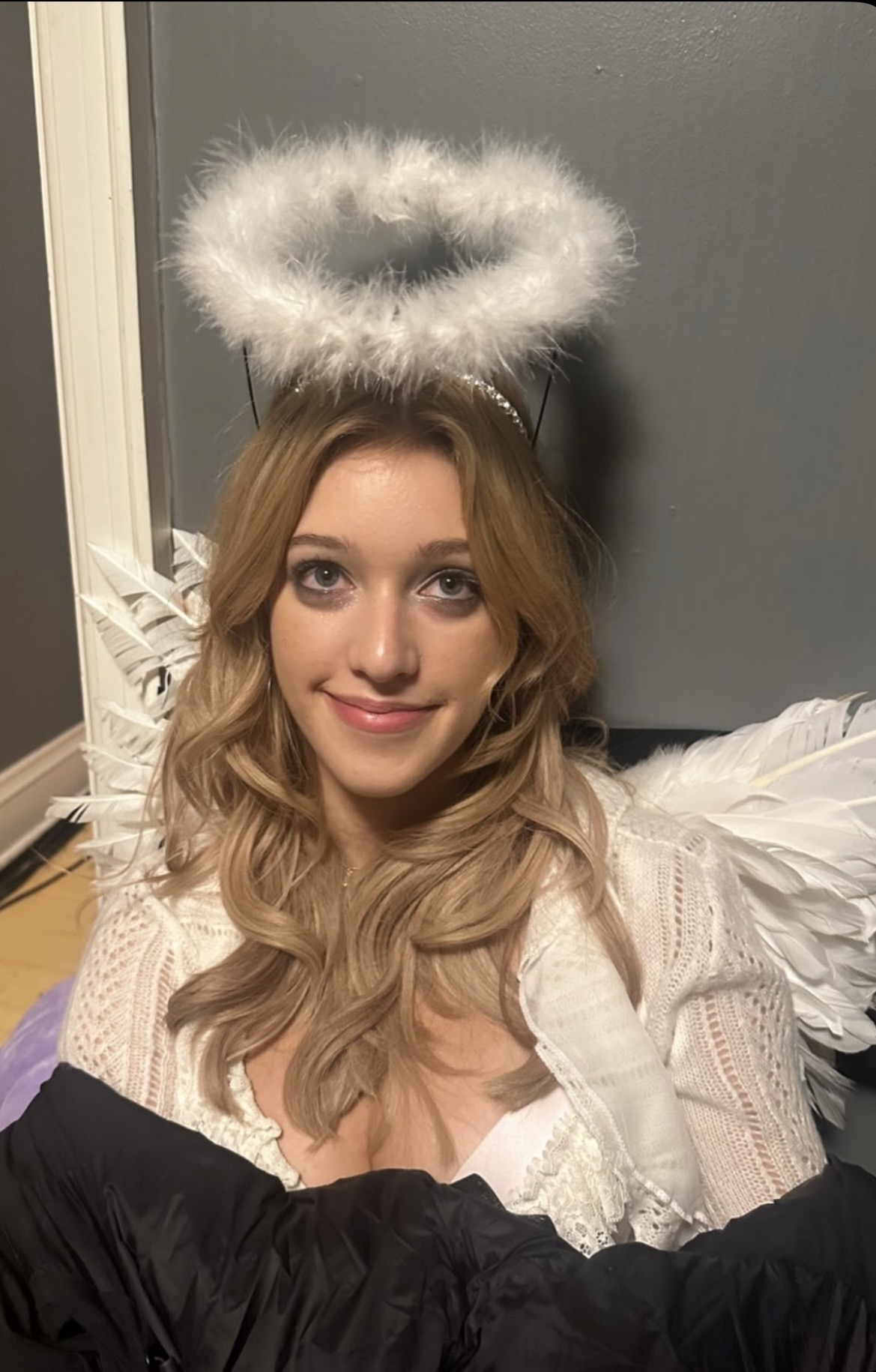
Hair and makeup are the people I spend the most time with, because we’re all doing our finals and processing together. We all sit at the monitor too. But we don’t necessarily work that closely. When we filmed the Halloween scenes, they had a lot of hair accessories, but for most of the production, they’re doing their own thing and so are we, and then we come together. I work really closely with sound. If a fabric is crunchy or something has to be rewired, I usually help with that. I also work closely with set dec. If we’re in Anya’s bedroom there could be 25 costume pieces in there that are from her actual costume closet on the truck, things she actually wears in the show. We also collaborate with props, making sure she has what she needs in the scene. On set, I stay in contact with the ADs, so I know what´s going on, and we don´t waste time. It’s about keeping as much as possible off their plates, because they’re looking at the bigger picture. On this show, for example, we were in charge of the purses, because they were integral to the outfits. A lot of the time, the actors have wallets, and sometimes props will come by and we figure it out based on what’s being filmed that day. With the bags with rosaries, some were props and others belonged to the costume department.
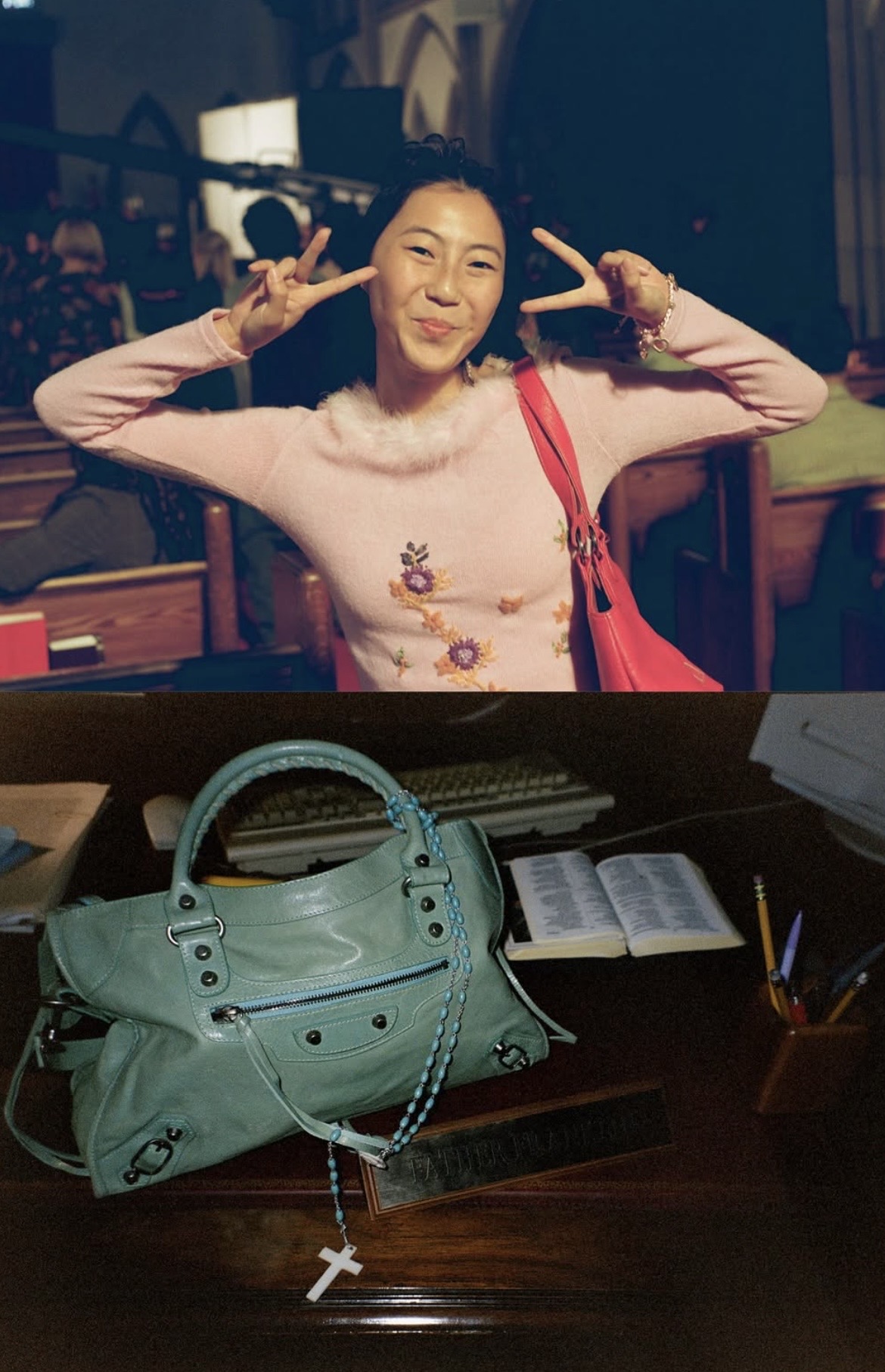
What was it like working with actresses like Kristina Bogic, Sofia Wylie, and Sara Boustany, among others? How involved were they in developing their characters’ individual styles?
They are all so lovely and such a nice cast. There is not a single actor or actress on the show that was not a delight. I literally felt like a mother to them. The Lions were like my little babies. I think that because Mirren had such a good connection with Quinn and Gina, and they were on this together and created the world, Mirren brought it all to the table and it was great. When it came to developing the character´s looks, Mirren was mostly responsible. I’m sure that when you see an actress cast in a role you’ve had in your head, you start to think, “Oh, maybe she’s more like this, or maybe she’s like that”. You can then shape the character’s look around her face and hair. Everyone is going to look different in each costume.
If anyone brought something extra to her character, it was Sara. As the show goes on, her character becomes a little more tomboyish. Sara wanted glasses herself; she pushed for that, and it was pretty iconic. She had more ideas along those lines. But with Kristina, for example, I think the character was perfectly suited to her. The way they chose Anya’s pieces was just perfect.
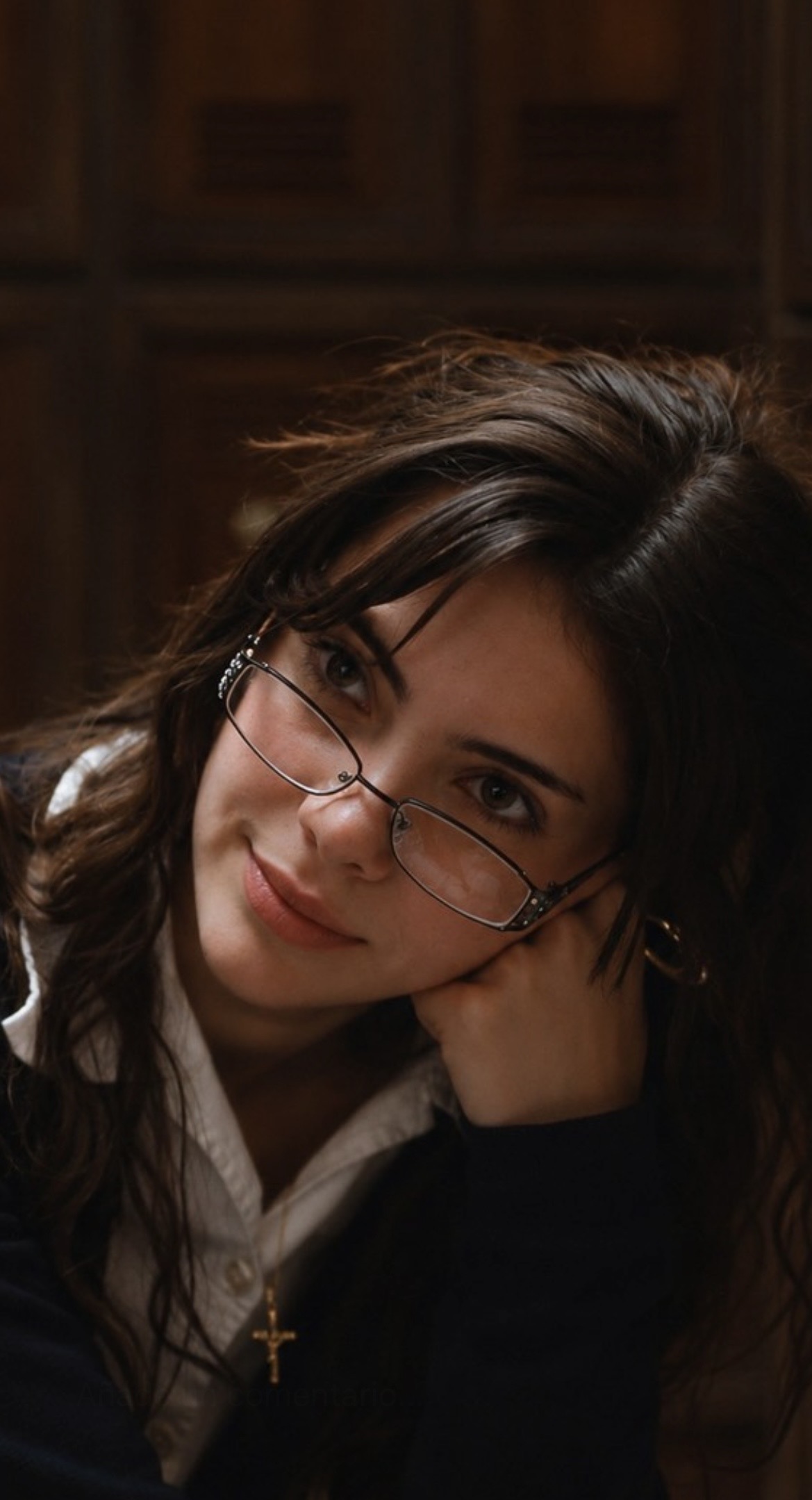
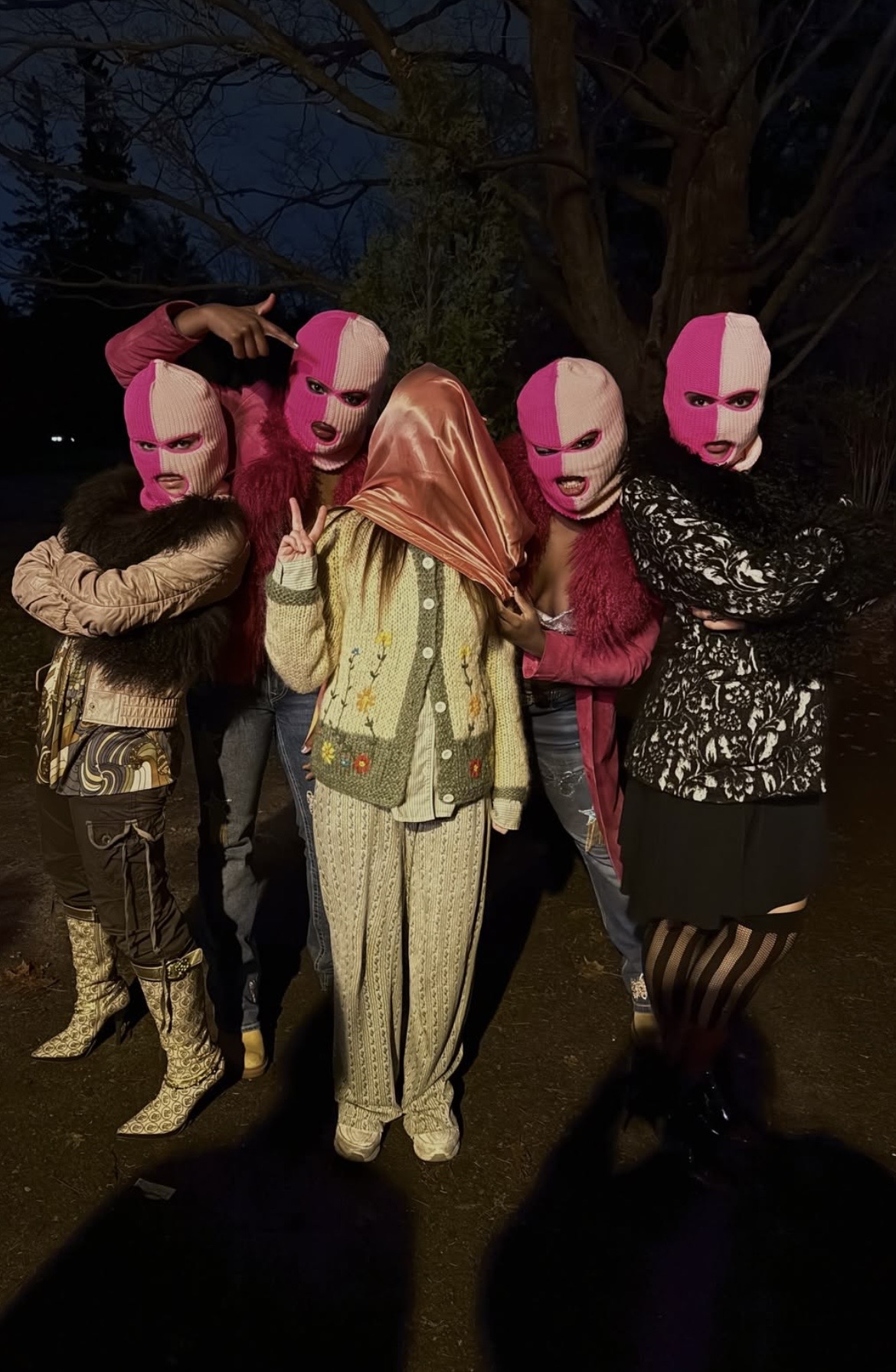
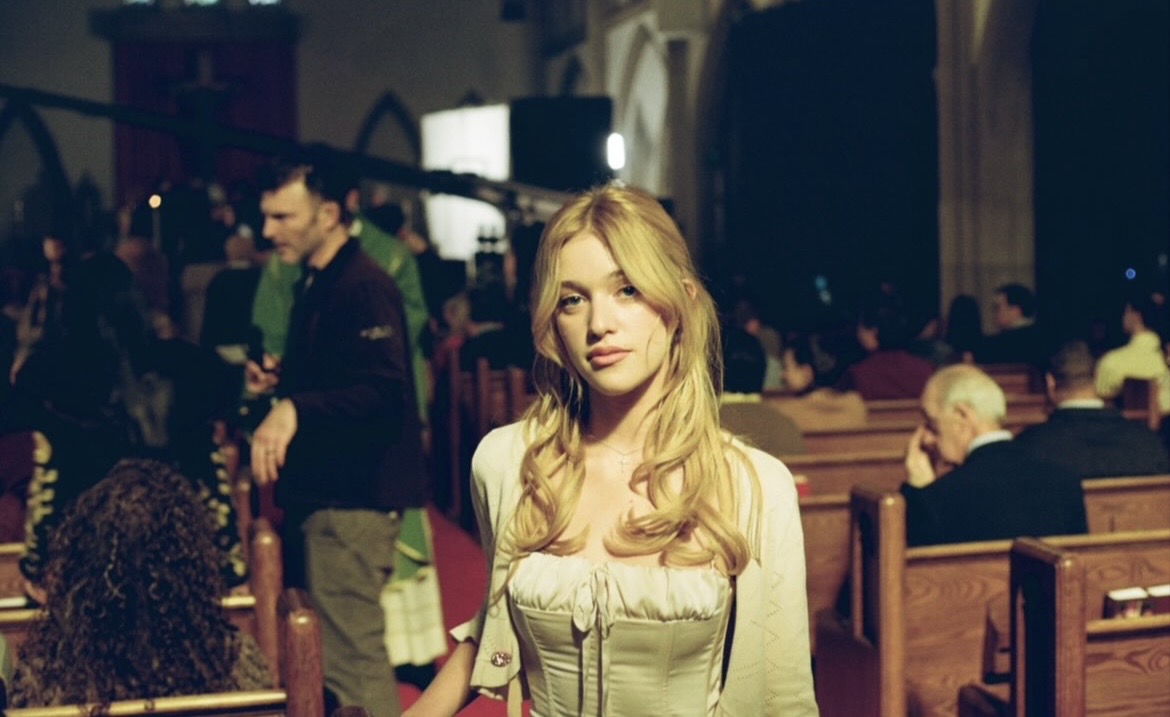
Isn’t it shocking to see an actress all dressed up in her costume and then meet her as who she is? How do you deal with that?
It’s funny, because with Emily Roman, for example, whose character is Claire, there were multiple times when she came in and I’d say, “Oh my god, they changed your costume, this is so cool,” and she’d say, “This is mine”. The casting was so well done that I think the styling blended with who they really are. And they’re gorgeous girls; even without makeup, they still look amazing.
Keeping actors comfortable is an important part of your job. How do you make sure they feel comfortable and confident in their costumes, especially during long filming days?
I think a lot of it is communication. There are some scenes where you’re not going to be comfortable at all – for example, the water fight sequence. They were in the pool all day, so it’s normal to get exhausted and cold. When we went to lunch, I dried all their stuff, and I always had fresh towels. For outside scenes, I always have parkas for them. If we’re shooting in very cold temperatures, they’ll usually have sweatpants on underneath. I just look at their shot and keep them comfortable between takes. The day we shot outside with Sara, when Elise was walking home from the Halloween party, it was the middle of the night. Quinn was an actress too, so she knows what is necessary, and we didn’t do that many takes when we shot it. It’s always about paying attention and figuring out what we can get away with in terms of comfort.
Do you think the way an actor feels in their costume can influence their performance or help them connect with their character?
Yes. I feel like once you put on some of those outfits, you’re so in character. I’m thinking specifically of when we were at the Holy Day Inn: they had an entrance, and then they were going out for dinner. Kristina came out in these gorgeous heels. They were absolutely stunning. You definitely change, because you’re serving and feeling iconic. Even the little things matter: the way you walk in heels changes your posture and your confidence too. If you feel good, you’re going to be perfect.
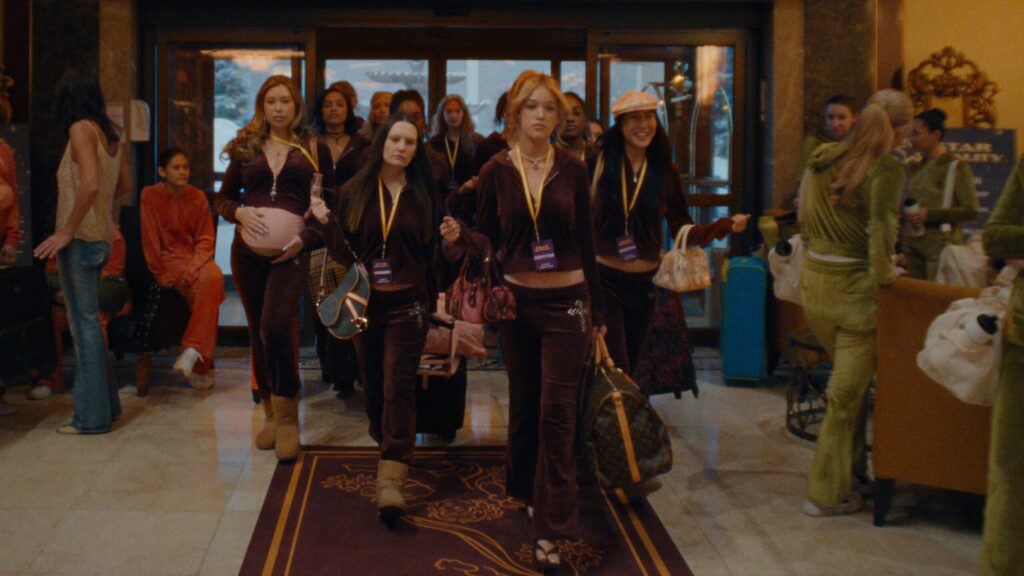
After spending so much time looking after the costumes and working closely with the actors, do you ever develop a particular attachment to certain costumes or characters?
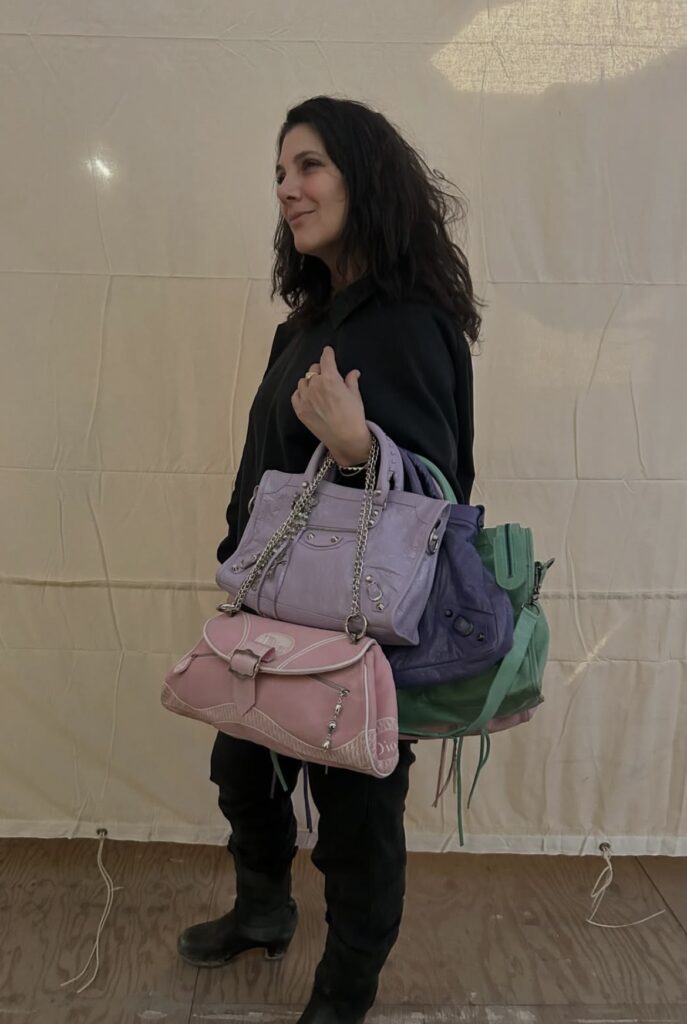
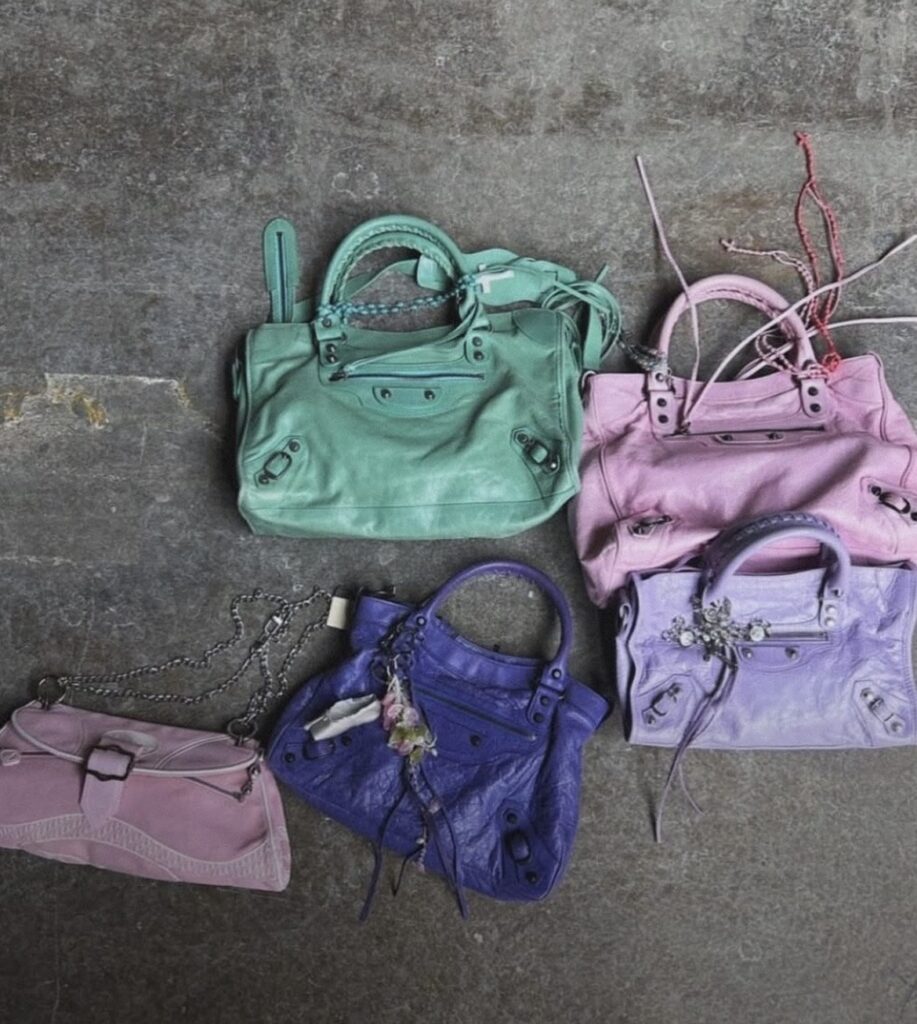
For sure. I truly felt like all of them were my little babies. I’m about 10 years older than most of them, the same as with my little sister, so I was very protective. They’re so funny and always keep the energy up. They were such a delight to work with. And as for the costumes, living in 2004 for six months was so exciting. Every day I got to go through different Balenciaga bags. It was all iconic, so I do miss it.
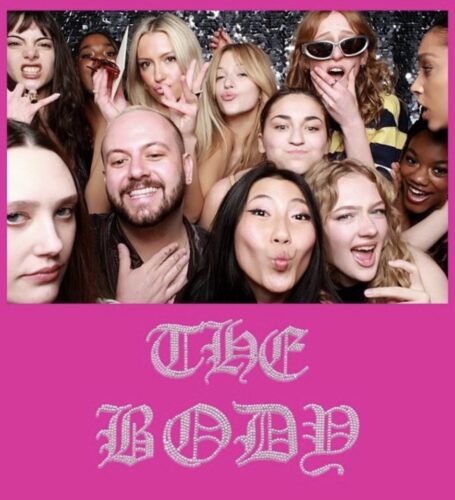
The Lions have some really distinctive outfits that I absolutely love. What do you think of those iconic looks? How did you maintain them, given how many scenes they have where they’re dancing? What was your responsibility there?
I feel like film sets even if you are filming inside they are always cold and a lot of the time it´s because the wires that are generating the power are coming from outside, so the door is always cracked. We filmed the dance scenes in February, which was negative temperature, it was so cold. The main thing was just keeping them warm. With those outfits on the first day we noticed that there was some chaffing so they added silicon underneath to make sure that where their arms were moving, they wouldn’t rub too much. Wiring those was really hard. The costumes were all made for them, so they were tailored to their exact measurements. Every girl had different movements, for example Maddie (played by Shirley Chen) in the dance at Regionals she stretches back so we had to take into account that, for her to move as freely as possible. I kept an eye on that. We did rehearsals before we shot the scene, and I was watching it and taking notes about what they were going to do in terms of dancing. Emily Roman and the Pierce twins do crazy flips. She does this and she does that. Just being able to sort of anticipate where the costumes could break. But they were very well made and they fit them perfectly. That part was easy; the difficult part was the temperature, with them being in leotards.
Which costume was more difficult: the blue one they wore at Regionals, or the ones Anya and Elise wore in their duo scene?
The duo was easier, it was comfier and I think that when you are comfy you can forget about it, they are just clothes. But in the case in which you are wearing heels or smaller outfits, you can get cold easily or there is so much going on.
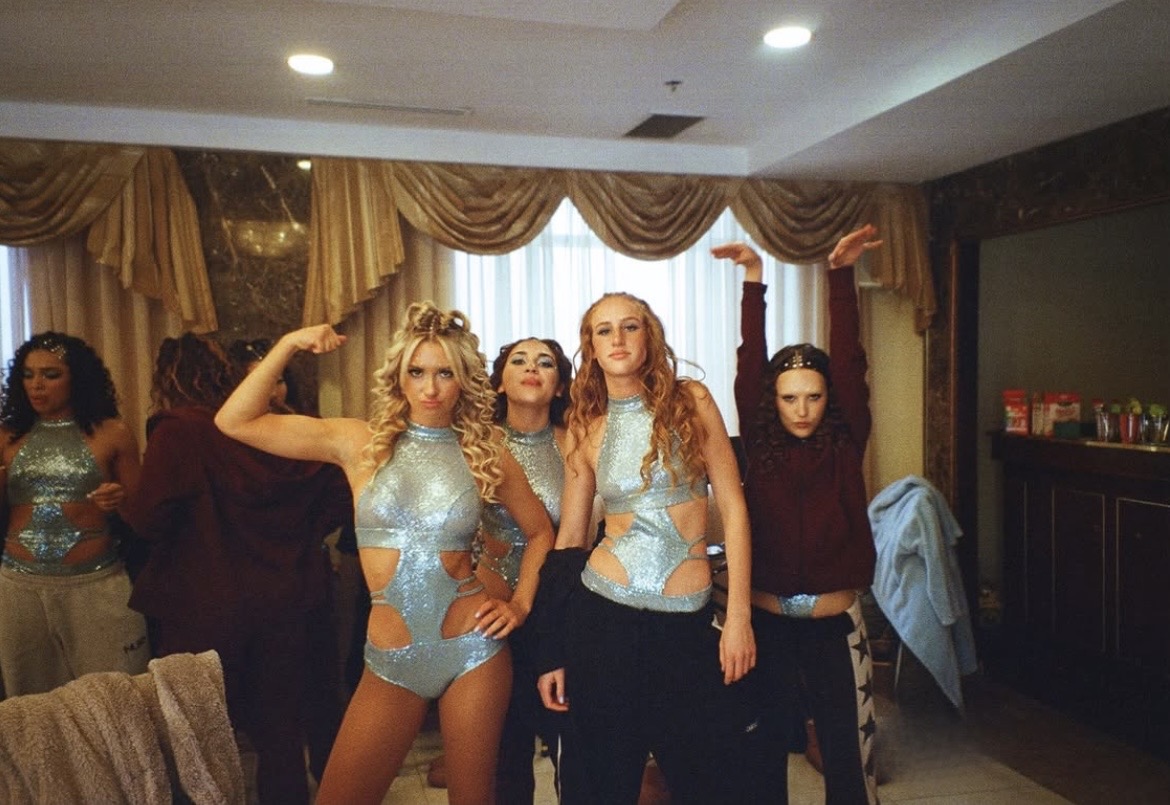
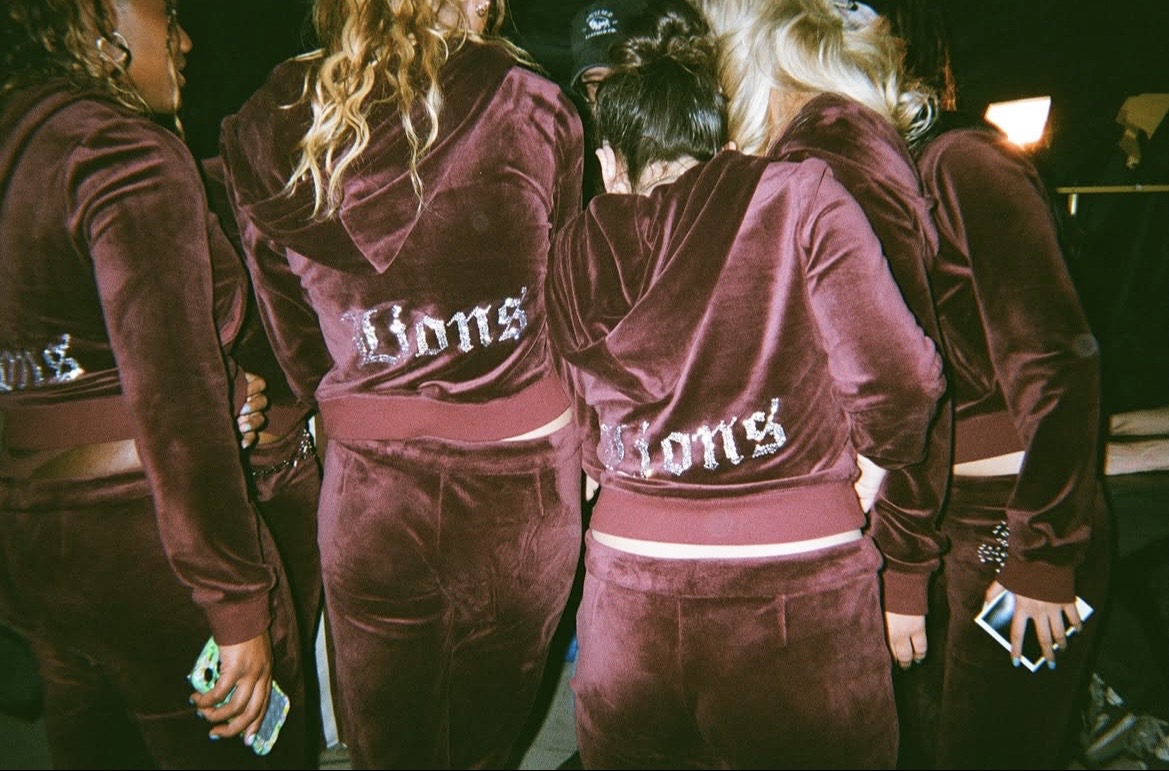
How do you work with the choreography or movement team in those scenes, for example?
I honestly feel choreographers are kind of like stunt coaches. I’m gonna make sure they look good while doing it but they are the ones captaining the ship in those moments. If something is happening and you need to fix it or if they are giving notes I try to be quiet and fix it off to the side.
Costume design is not only about creating beautiful outfits; it’s also about making sure they work in real filming conditions. How do you balance the original designs with practical considerations such as movement, lighting, camera angles, and the demands of a scene?
Mirren has already handled most of that in the fittings, because when you design for television, as opposed to a photo shoot, you’re designing 360. You’re making sure the whole thing works. For example, someone is wearing a crop top and then a skirt, and there’s the space in between. When you wire it, you’re like, “The wire should go here”, and then she turns, and we move the wire back to the front. You’re always trying to figure it out: where are we going to put the mic pack? I have to watch the monitor and make sure the actors are as comfortable as possible. For example, with Bella, who plays Katie, her hair was bigger, so we hid the mic pack behind her neck. You’re trying to find the space for it. It’s complicated, but you keep moving it until the position is right.
If you had to describe the overall fashion identity of the series in just three words, which ones would you choose?
I would choose “absolutely, f***ing, iconic”.
We’re reaching the end. When the audience watches The Body on Netflix, they’ll see the finished result, but they won’t necessarily know how many people and how much work went into every single look. What is the one thing you’d love viewers to appreciate about the costume department after watching the series?
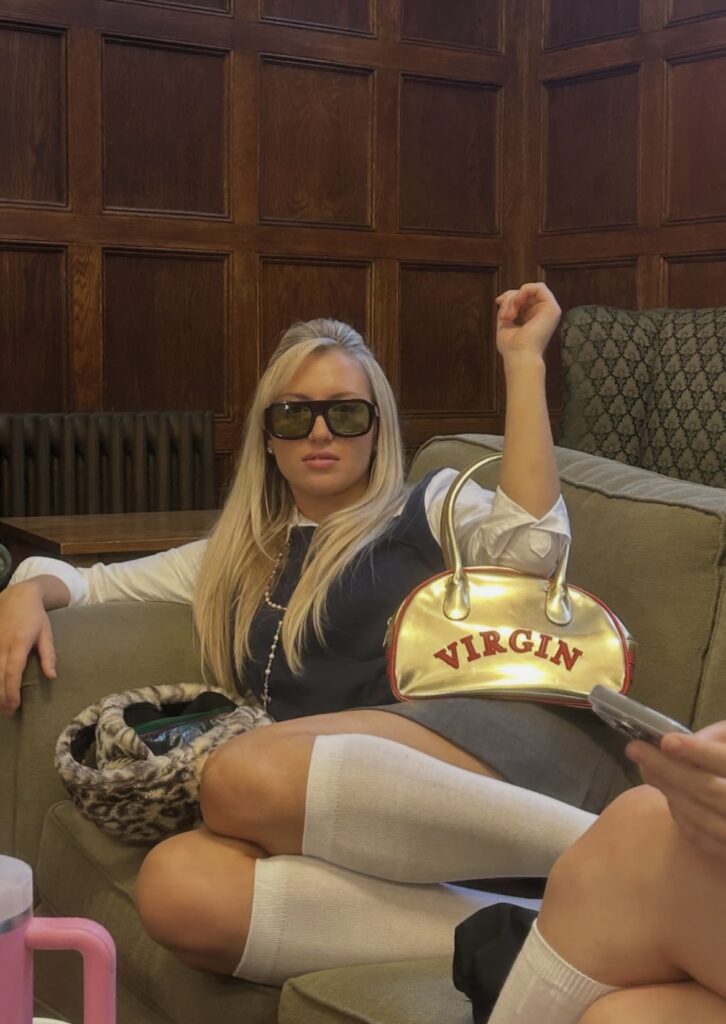
I’d say it has to do with the vintage, iconic pieces Mirren and Gillian were able to source. We had so many Balenciaga City bags, Fendi – they were all so cool. She would find a beige City bag in bad condition and bring it to our breakdown artist, Tamara, who would clean the bag, restore it, and dye it so it matched the outfits perfectly. That was impressive. The craftsmanship – even I was like, “Oh my god, I can’t believe we did that”. I love Emily’s bag that says “Virgin” on it. The twins’ bags were also iconic. Sara also got a Von Dutch bag. It was absolutely everything!
To end the interview, if you could take home one outfit from The Body, which one would it be, and why?
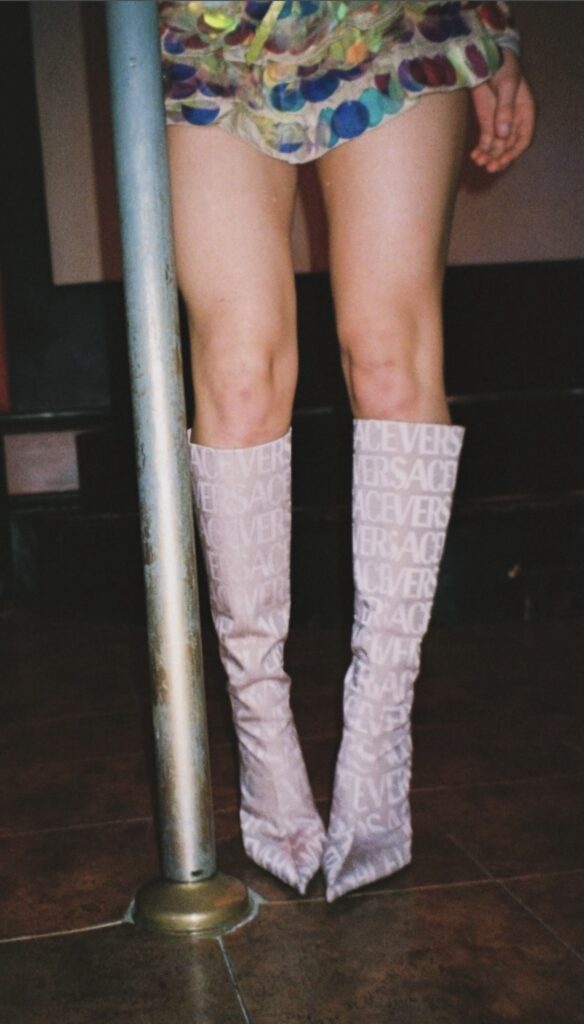
Obviously, I’d want the Lions’ burgundy velour tracksuit; I think I deserve one of those. That would be the one outfit. Also -not an outfit, but a piece- I love the Versace boots Kristina wears. So good. And a City bag. I feel Balenciaga should sponsor us. And we inspired Gabby Windey to get one; she really liked them. They’re such good bags. So the outfit would be the burgundy tracksuit with the Versace boots and the Balenciaga City bag.
+Photo credit: The Body (Netflix) / Byrdie
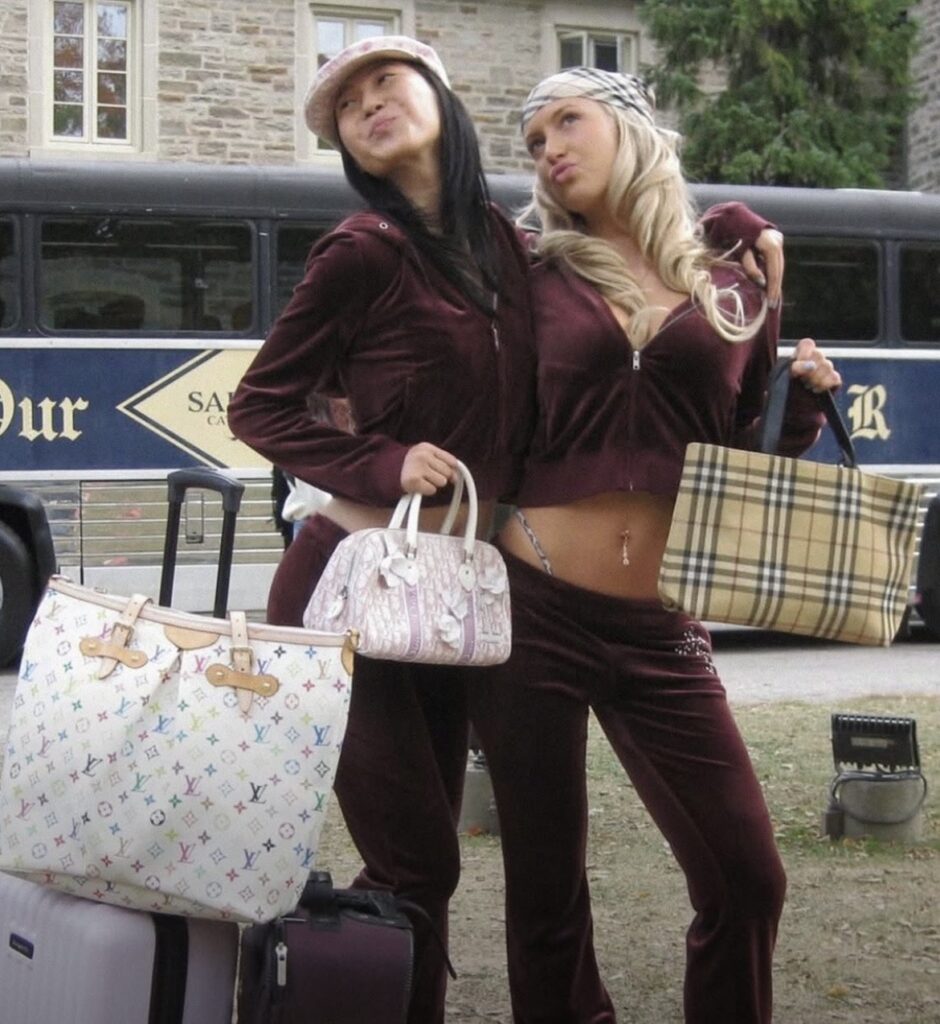
That’s amazing! Love the outfit! Colin is such a talented person; he deserves all the best. And please, Netflix, we want merchandise from the show, starting with the Lions’ tracksuits.
En otras noticias, no te pierdas Banksy vs. King Robbo: la guerra de graffiti que incendió Londres